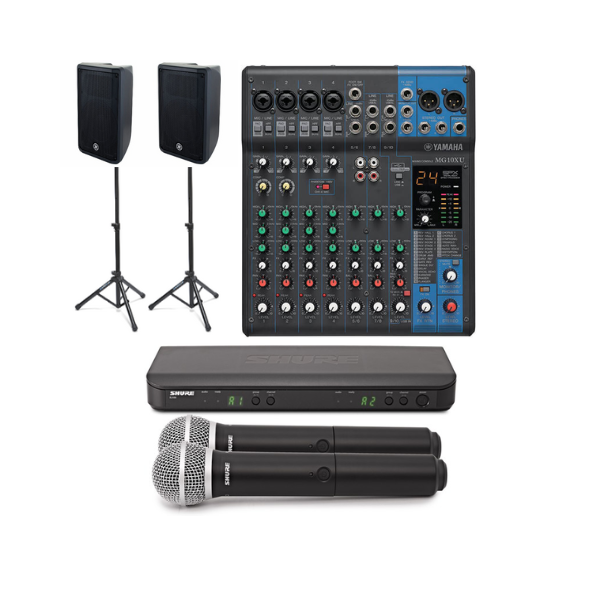

For any modern church in Kenya, delivering the word clearly is the foundation of a transformative worship experience. Whether your congregation is gathering for an intimate Sunday morning service, a multi-day convention, or a high-energy praise and worship session, the audio system bridges the gap between the pulpit and the pews.
Too often, worship spaces across Nairobi struggle with acoustic challenges: echoing sanctuaries, harsh microphone feedback, muffled sermons, or instruments that drown out the choir. Achieving crisp, intelligible audio requires more than just buying random loudspeakers; it demands a strategic approach to professional audio engineering and tailored component integration.
This blueprint explores the technical essentials of church sound system design, addressing the unique challenges of Kenyan architectural layouts and highlighting professional solutions available through Premier Audio Visual’s Sound PA Collection.
The Acoustic Challenges of Kenyan Church Architecture
Before selecting hardware, it is critical to evaluate the physical space where the sound will travel. Many sanctuaries across East Africa present distinct structural challenges:
High Ceilings and Reflective Surfaces
Traditional and contemporary church buildings often feature exposed iron-sheet roofing, wide concrete floors, and large glass windows. These hard surfaces act as acoustic mirrors, causing sound waves to bounce erratically. This creates high reverberation times, where words overlap and become unintelligible.
Deep or Wide Sanctuaries
In long rectangular halls or wide L-shaped structures, a standard pair of speakers placed at the front will fail. Pushing the volume high enough to reach the back rows will overwhelm and deafen congregants sitting in the front rows.
High Ambient Noise Floors
Many urban churches operate in bustling commercial areas, close to busy roads, or alongside neighboring ministries. Your sound system must be engineered to project clearly over this external noise without distorting or clipping.
Core Pillars of a Professional Church Sound Architecture
A balanced, high-performance house of worship sound infrastructure relies on four primary building blocks working in absolute harmony:
[Acoustic Source: Voice/Instruments]
                 │
                 ▼
     [Microphone Capture Engine]
                 │
                 ▼
     [The Mixing & DSP Command Center]
                 │
                 ▼
[Distributed Power Amplification & Loudspeakers]
                 │
                 ▼
     [Crisp, Intelligible Audio]
1. Microphone Capture Engine
Capturing a clean signal at the source is vital. If a microphone produces muddy or thin audio, no amount of equalization downstream can fully fix it.
-
The Pulpit: For pastors and main speakers, a premium gooseneck microphone mounted to the podium or a high-tier wireless lapel/headworn microphone ensures consistent vocal capture, even as the speaker moves across the altar.
-
The Choir and Worship Team: The choir requires specialized, wide-cardioid condenser microphones suspended overhead or mounted on stable stands to capture blended vocal harmonies evenly. Lead vocalists should use rugged, feedback-rejecting dynamic handheld microphones.
-
Instruments: Instruments like acoustic guitars, keyboards, and electronic drums should run through balanced Direct Injection (DI) boxes to eliminate the background buzz and hums caused by long stage cable runs.
2. The Mixing and DSP Command Center
The audio mixer acts as the brain of the church sound infrastructure, routing every microphone and instrument appropriately.
-
Analog Simplicity: For small fellowships with minimal inputs, a premium analog mixing desk provides a straightforward, user-friendly interface for volunteer technical teams.
-
Digital Precision: Modern ministries benefit significantly from upgrading to digital mixing consoles. Digital boards compress unpredictable vocal dynamics, apply noise gates to silence open mics when not in use, and include precise parametric EQs to eliminate feedback. Crucially, they let you save “scenes,” allowing you to recall the exact settings from your midday midweek service or Sunday morning soundcheck with one click.
3. Distributed Power Amplification and Loudspeakers
Choosing the right speakers involves matching their coverage pattern and power handling to the room’s layout.
-
Point-Source Enclosures: Perfect for small-to-medium rectangular sanctuaries, high-output 12-inch or 15-inch active/passive speakers project sound directly toward the congregation.
-
Line Array Systems: Ideal for large mega-churches or expansive auditoriums, line arrays feature modular speaker clusters rigged vertically. This configuration projects sound horizontally over long distances, ensuring the back rows experience the same volume and clarity as the front.
-
Fill and Monitor Speakers: Compact delay-fill speakers can be mounted halfway down long walls to bolster clarity in the back rows. On stage, low-profile stage wedges or clear In-Ear Monitor (IEM) networks ensure pastors and musicians can hear themselves clearly without adding excessive volume to the main hall.
4 Essential Tips for a Successful Installation
To maximize your audio investment and avoid costly mistakes, follow these industry-standard implementation rules:
Conduct an Engineering Site Survey First
Never buy generic “out-of-the-box” sound bundles based on price alone. Every house of worship has a unique acoustic fingerprint. A professional technical site inspection assesses dimensions, ambient noise, and architectural elements to map out the ideal speaker placement and angling.
Plan for Proper Gain Staging and System Tuning
Ensure your installation team ring-outs the sanctuary using a real-time analyzer (RTA). This process pinpoints the specific frequencies causing feedback in your room, allowing you to apply subtractive equalization to tame those problem areas before services begin.
Isolate Clean Power
Audio gear is sensitive to voltage fluctuations. Avoid running high-draw sound amplifiers on the same power line as heavy air conditioning units or catering equipment. Install dedicated voltage stabilizers and power conditioners to shield your digital mixers and processors from unexpected power surges.
Train and Empower Volunteer Tech Teams
The best sound equipment is only as good as the person operating it. When updating your audio setup, budget time for hands-on technical training. Ensure your team understands how to adjust vocal EQs, manage monitor mixes, and safely power down the system to prolong the equipment’s lifespan.
Partner with Premier Audio Visual for Your Ministry’s Needs
Achieving excellent audio clarity requires a balance of high-quality equipment, precise system design, and professional technical installation.
At Premier Audio Visual, we specialize in providing authentic, durable sound and PA equipment for sale and installation across Kenya. Our inventory includes everything from clear wireless microphones and digital mixing consoles to powerful line arrays and high-performance point-source speakers. We partner with churches of all sizes to design, install, tune, and maintain custom audio ecosystems that complement your architectural layout and fit your budget.
Ready to elevate the acoustic experience in your sanctuary? Explore our specialized solutions at Premier Audio Visual, or connect directly with our installation consultants via WhatsApp today for an expert site evaluation and a tailored quotation for your project.