

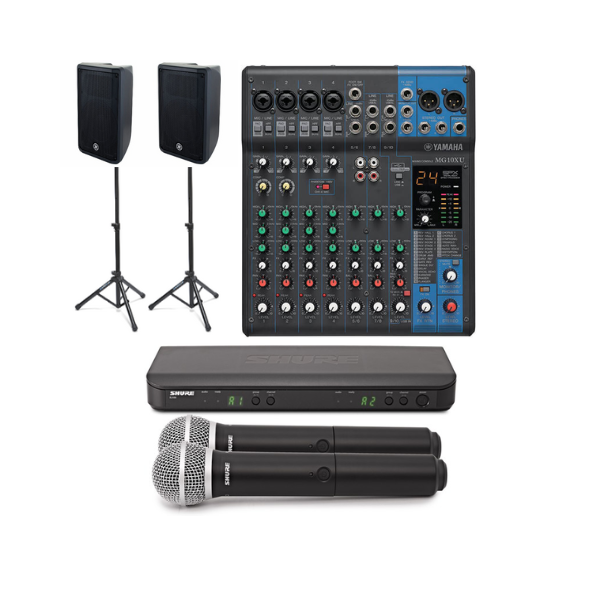
For corporate organizations, religious institutions, schools, entertainment venues, and event planners across Kenya, purchasing a professional Public Address (PA) system is a significant long-term capital investment. The right sound equipment enhances communication, elevates music quality, and ensures your venue’s audio projects clearly and reliably for years to come.
However, navigating the local market can be complex. Buyers are frequently forced to choose between overly cheap, unbranded systems that fail within months and overpriced equipment bundles packed with features they may never use. Understanding what drives public address system costs and knowing which technical specifications matter most is essential for making an informed purchase.
This comprehensive guide explores the core factors influencing professional audio equipment prices in Kenya. It outlines a strategic component checklist and breaks down the tailored procurement and installation solutions available through Premier Audio Visual’s Public Address Systems.
Key Drivers of PA System Pricing in the Kenyan Market
When reviewing commercial quotes for audio gear, several key factors determine the overall cost:
1. Active vs. Passive Speaker Architecture
-
Active Systems: These loudspeakers feature built-in, factory-calibrated internal power amplifiers. They offer a simpler setup footprint and eliminate the need for external amplifier racks, which makes them highly efficient for multi-purpose halls, schools, and corporate presentation kits. Because they combine processing and power in a single cabinet, active enclosures typically carry a higher standalone cost per speaker.
-
Passive Systems: These enclosures rely entirely on external power amplifier units and dedicated speaker cables to run. While the speakers themselves are less expensive individually, you must factor in the cost of high-quality standalone amplifier racks and crossover processors. Passive systems are highly scalable and remain the preferred choice for permanent church installations and large touring sound operations.
2. Digital vs. Analog Signal Processing
A system anchored by a basic multi-channel analog mixer is highly cost-effective and easy to operate for volunteer teams. However, systems that integrate digital mixing consoles command a premium. Digital setups offset their higher upfront cost by replacing racks of external hardware with built-in parametric equalizers, noise gates, automatic microphone mixers, and stage-saving scene recall options.
3. Build Material and Component Grade
Loudspeaker enclosures built with multi-layered wood or Medium-Density Fibreboard (MDF) are sturdier and deliver vastly superior acoustic resonance compared to thin plastic molded cabinets. Premium cabinets cost more because they minimize internal vibration, project sound more efficiently, and withstand the wear and tear of transport over rough roads or dusty outdoor environments.
Baseline Pricing Estimates for PA Systems in Kenya
To assist procurement officers and finance committees with budgeting, the table below outlines typical market price expectations based on system scale and venue capacity:
| System Category | Targeted Venue Capacity | Estimated Market Price Range (KES) | Core Component Framework |
| Boutique / Seminar System | Up to 100 People | KES 65,000 – KES 150,000 | 2 Compact Active 12″ Speakers, Pair of Tripod Stands, 4-Channel Analog Mixer, 2 Wireless Microphones. |
| Institutional / Mid-Scale System | 100 – 400 People | KES 180,000 – KES 450,000 | 4 High-Output 15″ Speakers, 2 Dedicated Subwoofers, 12-to-16 Channel USB Mixer, Independent Stage Monitors, Wireless UHF Microphones. |
| Large-Scale / Performance System | 500+ People | KES 500,000 – KES 1,500,000+ | Modular Line Array System Elements, Heavy Dual-18″ Subwoofers, Multi-Channel Digital Console, Professional Power Amplifiers, Aluminum Rigging Trusses. |
Structural Buying Checklist: What to Look For Before Making a Purchase
Before approving a purchase or signing off on a supplier agreement, ensure the hardware package meets these four essential technical benchmarks:
[Procurement Check] ──> 1. Power Output vs. Continuous RMS Ratings
                        2. Frequency Response and Audio Distribution
                        3. Microphone Frequency Band Management
                        4. Future Scalability and Expansion Support
1. Power Output: Peak Power vs. Continuous RMS Ratings
Suppliers frequently highlight “Peak Power” or “Max Output” numbers (e.g., 3000 Watts) on promotional spec sheets. This is a common marketing tactic; peak numbers only indicate the absolute maximum power a speaker can handle for a split second before failure.
Instead, look for the Root Mean Square (RMS) rating, which measures the continuous, clean power the speaker can deliver safely over hours of operation. A true 350-Watt RMS speaker will consistently outperform and outlast an unbranded speaker claiming thousands of “Peak” watts.
2. Frequency Response and Audio Distribution
For clear speech reproduction, point-source speakers with clean mid-range and high-frequency horn drivers are essential. However, if your venue hosts live bands, plays playback music, or supports contemporary worship, you must add dedicated subwoofers. Subwoofers handle low-frequency bass notes (typically below 100Hz), freeing up your main top speakers to project clear, undistorted vocals.
3. Microphone Frequency Band Management
Wireless microphone systems must offer switchable multi-frequency channels operating on clear UHF bands. Cheap wireless microphones are fixed to a single frequency band; if you experience local radio or cellular interference at your venue, the microphone becomes unusable. Selecting a system with true diversity receivers ensures stable wireless operation without sudden dropouts.
4. Future Scalability and Expansion Support
Avoid buying a closed audio system that runs at maximum capacity from day one. Ensure your mixing console has at least 30% more input channels than you currently need, and verify that your power amplifiers can handle additional speaker loads safely. This forward-thinking approach saves you from having to replace the entire system when your organization or venue expands.
Why Professional Installation and Tuning Are Vital
Buying authentic equipment is only half the battle. How those components are installed and calibrated within your specific venue directly dictates the final sound quality.
An expert installation process should always include:
-
Acoustic Mapping and Angling: Mounting and angling speakers precisely to maximize direct sound coverage for the audience while avoiding hard reflective surfaces like glass windows or uninsulated ceilings.
-
Gain Staging and Feedback Suppression: Calibration of the audio signal chain to eliminate background hums, system hisses, and microphone feedback loops.
-
Power Stabilization and Surge Protection: Installing dedicated power conditioners and automatic voltage switchers to protect your digital mixers and amplifiers from unexpected grid fluctuations or power surges.
Secure Your Sound Infrastructure with Premier Audio Visual
Investing in a public address system requires balancing financial prudence with long-term technical reliability. Partnering with a dedicated distributor ensures your equipment investment delivers crisp, professional audio for your audience.
At Premier Audio Visual, we provide authentic, high-performance live sound PA systems and individual audio components for sale across Kenya. Our expert team supports you through every step of the process—from the initial technical needs assessment and venue acoustic mapping to secure equipment supply, professional integration, and hands-on operational training for your staff.
Ready to upgrade your venue’s audio production quality? Explore our professional solutions at Premier Audio Visual, or connect directly with our procurement and technical consultants on WhatsApp today for a personalized evaluation and a competitive quote tailored to your project.